
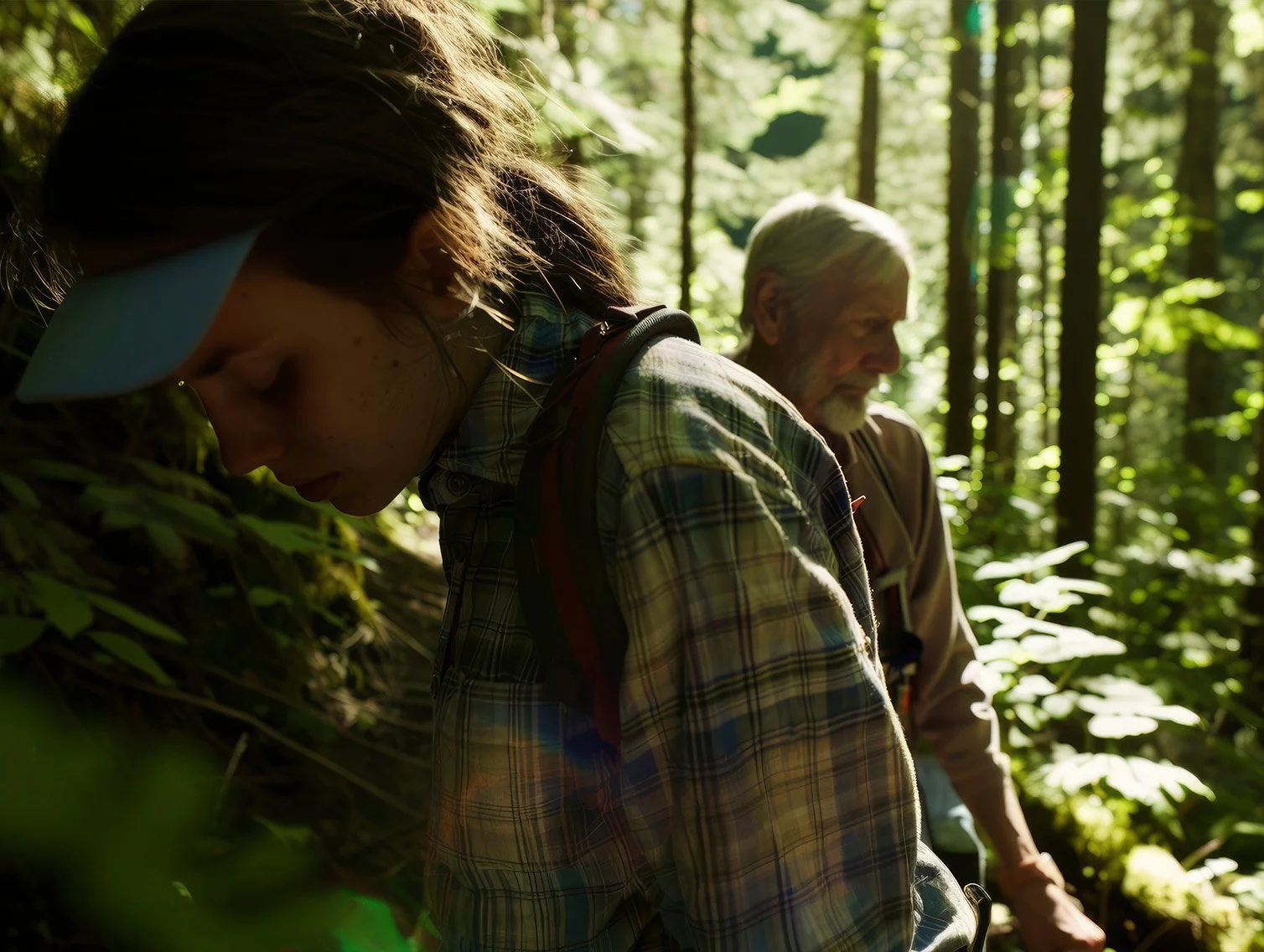
The Japanese have a word — ma — for the pause between things. The silence between sounds. The space between two people in a conversation. It is not emptiness. It is the thing that gives everything else its meaning.
Shinrin-yoku is ma in practice. Forest bathing — the literal translation of the term coined by the Japanese Ministry of Agriculture in 1982 — is not a hike. It is not exercise. It is not sightseeing among trees. It is the deliberate, unhurried act of being inside a forest and letting it work on you.
The science is unambiguous. Time spent in forested environments lowers cortisol levels, reduces blood pressure, boosts immune function, and improves mood in ways that urban green spaces simply cannot replicate. The trees release compounds called phytoncides — natural oils that form part of the forest's immune system — and when we breathe them in, something in our own biology responds. We calm. We regulate. We remember, on some cellular level, that we are animals who evolved in this kind of place.
What a guided session actually looks like
A shinrin-yoku session guided by a certified forest therapy guide bears very little resemblance to what most Western travelers expect. You do not cover ground. You might walk a single kilometre in two hours, stopping frequently to sit, to touch bark, to notice the quality of light through a particular canopy. The guide will offer invitations — not instructions — to engage your senses one at a time. What do you hear when you close your eyes? What does the moss feel like under your hand? What does the air taste like here versus twenty metres back, where the cedar gives way to birch?
It sounds simple. It is, in the best possible sense. And it is surprisingly difficult for minds trained to equate movement with productivity.
Hokkaidō in particular
Japan has forests worth bathing in across the country, but Hokkaidō — the northernmost main island — has something the others do not. Scale. Silence. A wildness that Kyoto, for all its beauty, has long since traded away. The cedar forests here are old in a way that registers physically. You feel the age of the place. It asks something of you — a quality of attention that most of us have forgotten we are capable of.
Eraya's Japan itinerary includes a guided shinrin-yoku session in Hokkaidō, staying at Zaborin — a collection of private villas set directly within the forest, where the boundary between inside and outside is almost deliberately unclear. You fall asleep to the sound of trees. You wake to mist.
It is, without question, one of the experiences our clients most often describe as the moment the trip changed.
A note on why this matters now
Ritual-based travel is growing because people are exhausted. Not tired — exhausted. The kind of depletion that a long weekend cannot fix and a beach holiday merely postpones. Shinrin-yoku works because it does not ask you to do anything. It asks you to stop. And in the stopping, something that has been running too hard for too long finally gets to rest.
That is what Eraya designs around. Not the itinerary. The restoration.